Student-Led Policy Reflections
Renel Ghana Foundation
Theme: The Power of Youth in Co-Creating Education
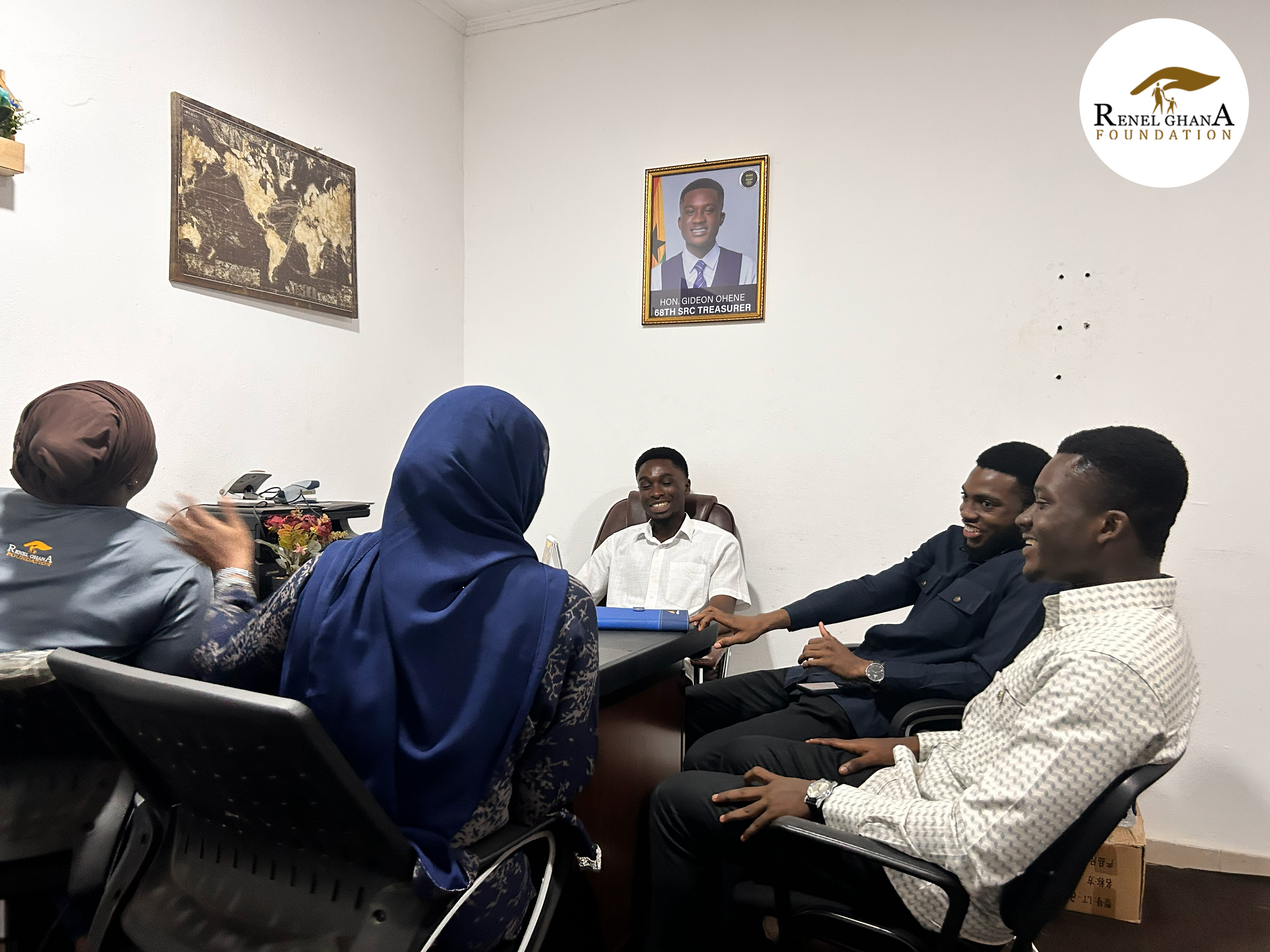
To commemorate the International Day of Education 2026, Renel Ghana Foundation convened Student Representative Council (SRC) executives from the University of Ghana and Islamic University College on 23–24 January 2026.
The engagement was grounded in the belief that students are not merely beneficiaries of education systems, but active contributors to their design and improvement. As SRCs increasingly occupy meaningful spaces in institutional decision-making, this dialogue provided an opportunity for student leaders to articulate the realities students face and propose solutions rooted in lived experience.
This student-led policy reflection presents the key challenges raised by SRC executives, the policy directions they proposed, and practical indicators to support accountability and implementation. Its purpose is to translate student perspectives into clear, equitable, and actionable policy pathways for tertiary institutions, government, and partners.
Key Challenges Identified by SRC Executives
SRC leaders highlighted a set of interrelated challenges affecting students across institutions:
Persistent inclusion gaps, where marginalized students are not consistently represented in policy and decision-making spaces.
Rising hostel and tuition costs, which compel many students to engage in part-time work, reducing time available for academic engagement and rest.
Limited lecturer accessibility, with inconsistent availability for academic guidance, feedback, and mentorship, both in-person and online.
Growing mental health pressures, linked to financial stress, housing insecurity, and demanding academic workloads.
Digital inequality and cybersecurity risks, which restrict participation in blended learning and expose students to digital harassment and violence.
Theory-heavy curricula, leaving graduates underprepared for practical workplace demands.
Underfunded infrastructure and weak accountability mechanisms across institutions.
Student-Centred Policy Directions and Indicators
In response to these challenges, SRC executives proposed the following policy directions, grounded in practicality and student experience.
1. Affordability and Student Financial Stability
Linked challenge: Rising costs of tuition and accommodation
Policy direction:
Pilot subsidized student accommodation schemes and transparent emergency financial support mechanisms, alongside strengthened student financial advisory services.
Why this matters:
SRC executives reflected on how financial strain affects academic focus, wellbeing, and completion rates.
Indicator:
- Percentage of students accessing subsidized housing
- Number of emergency grants disbursed annually
2. Lecturer Accessibility and Academic Support
Linked challenge: Limited access to lecturers
Policy direction:
Introduce institution-wide standards for lecturer accessibility, including published office hours, defined response timelines, and structured academic support systems.
Why this matters:
Predictable access to academic staff improves fairness, feedback quality, and learning continuity.
Indicator:
- Lecturer compliance with accessibility standards
- Average response times to student queries
3. Student Mental Health and Wellbeing Support
Linked challenge: Growing mental health pressures
Policy direction:
Strengthen guidance and counselling services through the recruitment of trained professionals and the formal inclusion of peer support mechanisms.
Why this matters:
Accessible mental health support improves retention, performance, and overall student wellbeing.
Indicator:
- Counsellor-to-student ratio
- Uptake of counselling services
4. Digital Access, Safety, and Learning Environments
Linked challenge: Digital inequality and cybersecurity risks
Policy direction:
Improve campus digital infrastructure, implement basic cybersecurity and online safety protocols, and support equitable access to devices and connectivity.
Why this matters:
Safe and reliable digital access is essential for participation in modern, blended learning environments.
Indicator:
- Percentage of students with reliable device and internet access
- Number of reported digital safety incidents and resolution timelines
5. Practical, Skills-Based, and Future-Ready Learning
Linked challenge: Theory-heavy curricula
Policy direction:
Gradually integrate practical learning components such as project-based assessments, internships, digital skills, and entrepreneurship training into academic programmes.
Why this matters:
SRC executives highlighted the need for stronger links between academic learning and workplace realities.
Indicator:
- Proportion of programmes with applied learning components
- Student participation in internships or practical projects
6. Infrastructure and Institutional Accountability
Linked challenge: Underfunded infrastructure and weak accountability
Policy direction:
Prioritise investment in learning infrastructure and introduce transparent performance monitoring mechanisms at institutional and administrative levels.
Why this matters:
Adequate facilities and accountability structures support quality education delivery and trust.
Indicator:
- Student-to-facility ratios
- Availability of publicly accessible performance data
7. Inclusion and Representation in Education Policy
Linked challenge: Persistent inclusion gaps
Policy direction:
Ensure the inclusion of marginalized groups in policy consultations and improve accessibility of learning environments and materials.
Why this matters:
Inclusive education design leads to fairer outcomes and broader participation.
Indicator:
- Representation of marginalized groups in consultations
- Accessibility compliance benchmarks
Closing Reflection
This student-led engagement reaffirmed that meaningful education reform requires more than consultation it requires partnership. When students are trusted as co-creators, education systems become more responsive, inclusive, and future-ready.
Renel Ghana Foundation remains committed to amplifying youth voices and supporting student-driven solutions that strengthen Ghana’s tertiary education sector.