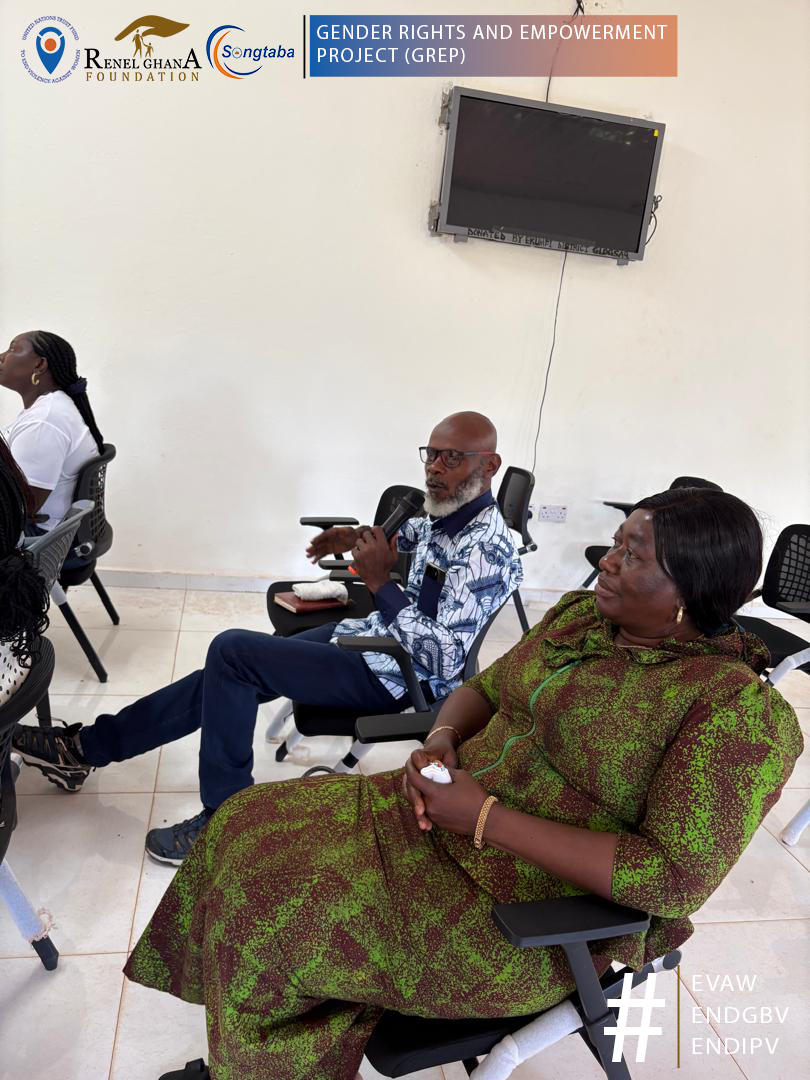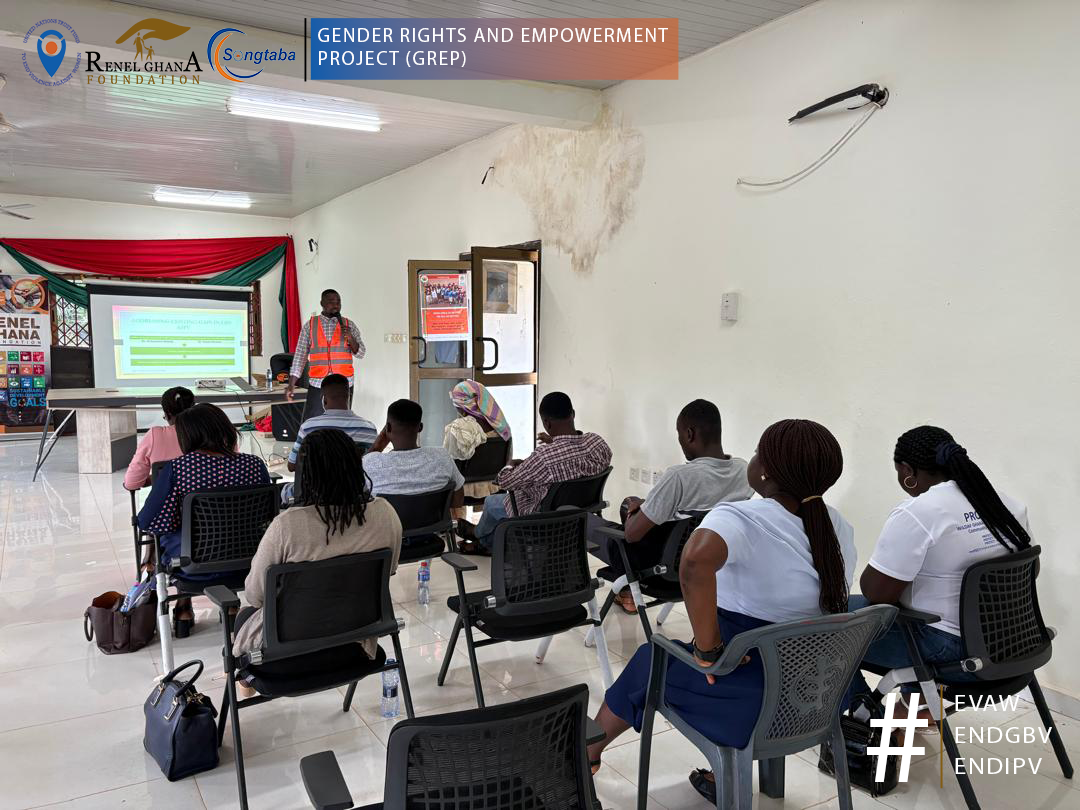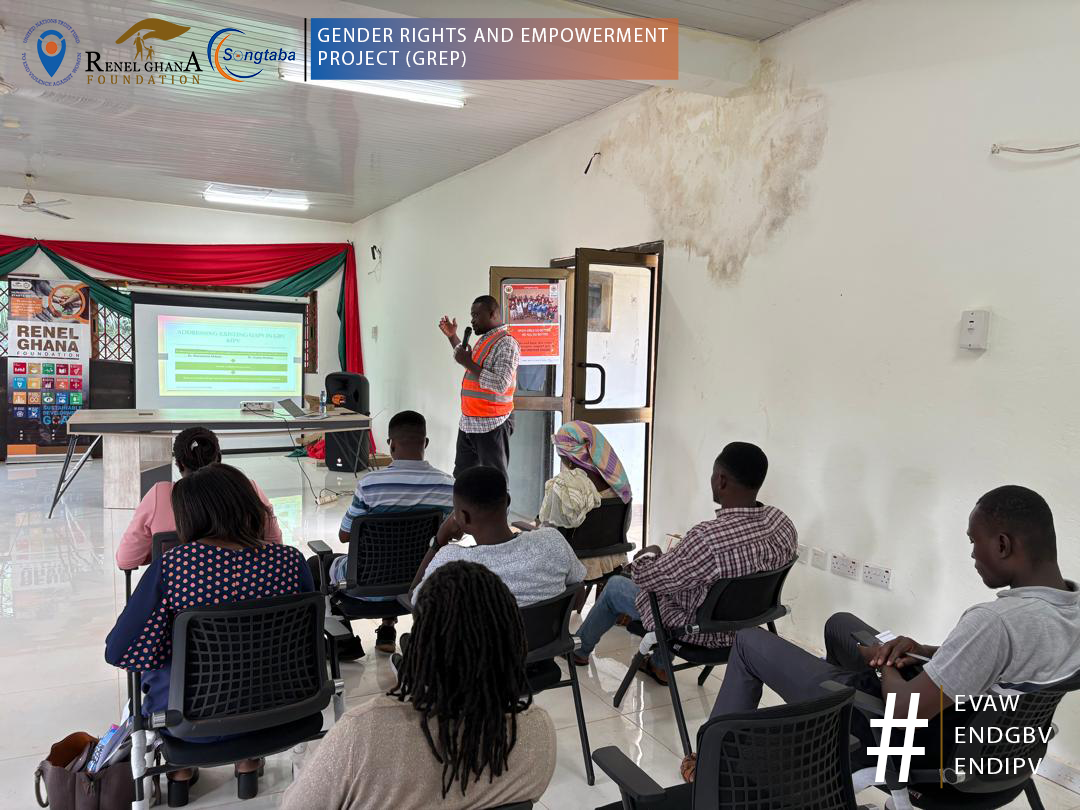
Renel Ghana Foundation, under the Gender Rights and Empowerment Project (GREP) and in partnership with Songtaba, with funding support from the UN Trust Fund to End Violence against Women, delivered a comprehensive capacity‑building training on survivor‑centred care for key service providers in Ekumfi District. The training strengthened practical skills for coordinated, compassionate responses to gender‑based violence and reinforced inter‑agency collaboration.
Purpose
- Enhance frontline capacity to provide trauma‑informed, survivor‑centred services.
- Improve coordination across health, protection, justice and social welfare actors for timely referrals and case management.
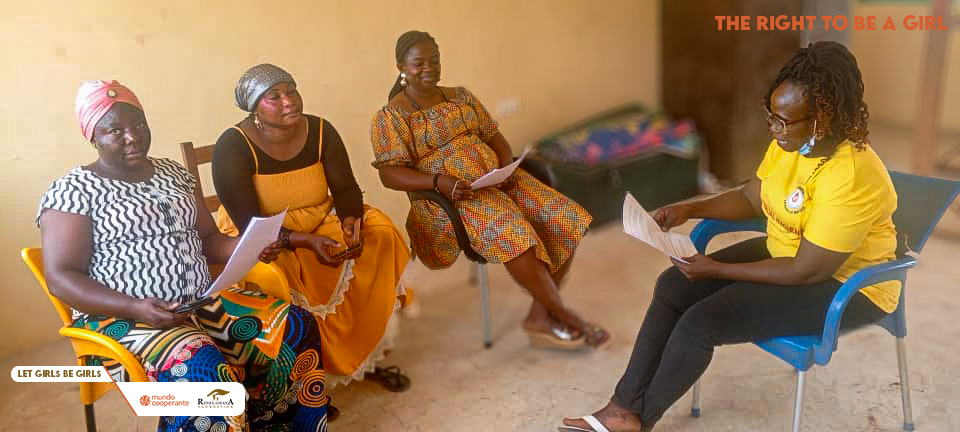
- Strengthen community reintegration pathways and psychosocial support for survivors.
- Standardise practice through shared tools, protocols and documentation.
Activities delivered
- Interactive sessions on survivor‑centred principles, trauma‑informed practice and ethical engagement.
- Practical exercises including role plays, case simulations and intake/referral mapping.
- Clinical and psychosocial modules covering immediate medical care, psychosocial first aid and follow‑up support.
- Protection and legal sessions on safety planning, protection orders and linkages to justice actors.
- Tools and templates introduction: standard intake form, referral directory and case documentation checklist.
Participants and roles
- Participants: district social welfare officers, DOVVSU officers, health clinicians, community protection volunteers, local NGO staff and district assembly representatives.
- Facilitators: Renel Ghana Foundation trainers, Songtaba technical advisors and guest resource persons from health, police and legal aid.
- Expected commitments: each agency to nominate a referral focal person, adopt the standard intake form and participate in monthly coordination meetings.
Outcomes and next steps
- Longer term: institutionalise standardised case management, strengthen one‑stop referral linkages and scale best practices across neighbouring districts.
- Immediate outcomes: draft district referral protocol produced; agency focal persons identified; participants completed practical case simulations.
- Short term: finalise and circulate the referral protocol; pilot the intake form in selected facilities; schedule monthly multi‑agency coordination meetings.
- Medium term: monitor referral completion and response times; run refresher trainings; integrate survivor‑centred modules into district induction for new staff.