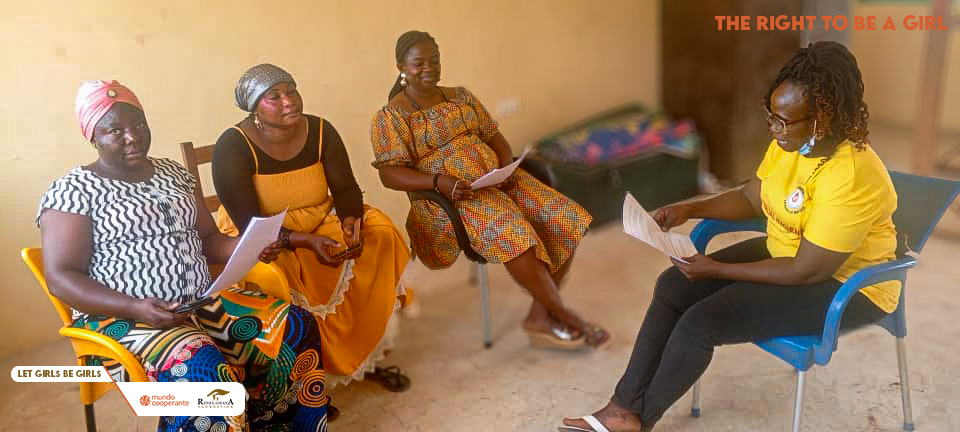
Renel Ghana Foundation, in partnership with the Langbinsi and Sakogu communities and with support from Mundo Cooperante, conducted a community sensitisation programme on ending child marriage under our Let Girls Be Girls Project. The event engaged 106 participants, including traditional and religious leaders, Social Welfare officers, the Girls’ Education Unit and DOVVSU representatives, and emphasised education as a critical tool for preventing child marriage and promoting girls’ well‑being.
Overview
A community‑led sensitisation brought together local leaders, protection actors and community members to discuss drivers of child marriage, legal protections, and practical steps to keep girls in school. The session combined information sharing, group discussion and community commitments to strengthen local prevention and response.
Purpose and focus
- Prevent child marriage by addressing social norms, economic pressures and misinformation.
- Promote education as the primary protective factor for girls’ health, safety and future opportunities.
- Clarify protections: explain legal frameworks, reporting channels and the role of DOVVSU and Social Welfare.
- Mobilise leaders: secure public commitments from chiefs, religious leaders and school officials to support girls.
- Build local capacity: identify community champions and referral pathways for at‑risk girls.
Participants and activities
- Participants: 106 attendees including traditional and religious leaders, Social Welfare officers, Girls’ Education Unit staff, DOVVSU representatives, teachers, parents and youth.
- Activities delivered: presentations on legal protections and the harms of child marriage; group discussions on barriers to girls’ education; testimonies and role plays; mapping of local referral and support services; public pledges from community leaders.
- Materials distributed: information leaflets on child protection and school re‑entry, contact cards for Social Welfare and DOVVSU, and guidance for community champions.
Outcomes and next steps
Next steps: finalise and circulate the referral list within two weeks; schedule follow‑up school outreach sessions led by the Girls’ Education Unit; train community champions on safe reporting and confidentiality; monitor progress through monthly coordination check‑ins with Social Welfare and DOVVSU.
Immediate outcomes: stronger awareness among leaders and parents of the harms and illegality of child marriage; public commitments from several chiefs and religious leaders to oppose child marriage.
Practical outputs: a draft local referral list and a roster of community champions to monitor at‑risk cases.