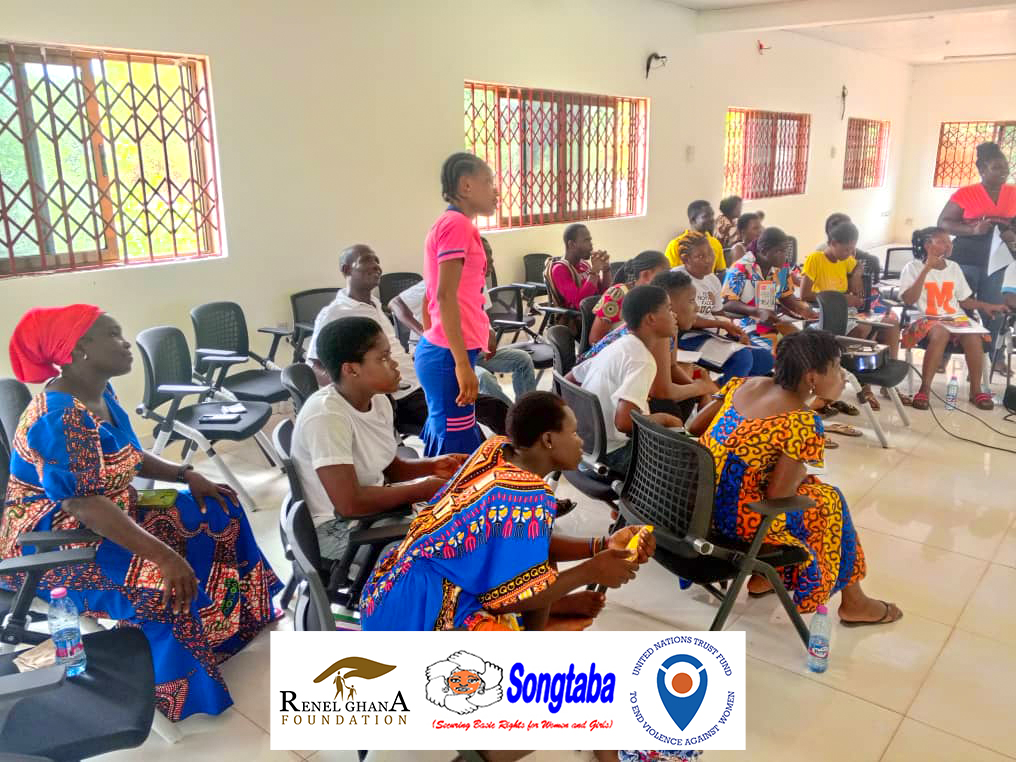
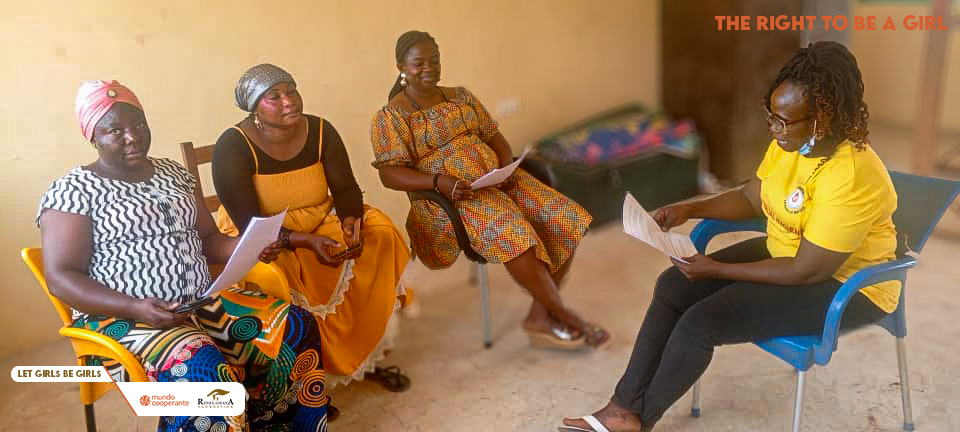
Renel Ghana Foundation, under the Gender Rights and Empowerment Project and in partnership with Songtaba, supported a SMART Youth training on Intimate Partner Violence (IPV) for fifteen girls drawn from Narkwa, Ekumpoanu and Soprodu. The session was facilitated by CHRAJ, with technical support from the Department of Social Welfare and Community Development and the Ekumfi District GES Gender Coordinator, and focused on building knowledge, leadership and survivor‑centred response skills among adolescent girls.
Overview
A focused, participatory training equipped fifteen girls with practical skills to recognise IPV, support peers, and lead prevention activities in their communities under the Gender Rights and Empowerment Project. The training combined rights‑based information, psychosocial support techniques and community outreach planning.
Purpose
- Empower adolescent girls with knowledge of rights, protection mechanisms and safe reporting channels.
- Build leadership so girls can act as peer educators and community advocates against IPV.
- Strengthen referral links between youth, schools and district service providers.
- Promote resilience through psychosocial first aid and peer support networks.
Training content and methods
- Core topics: legal rights and complaint mechanisms; identifying signs of IPV; psychosocial first aid; confidentiality and safe referrals; school‑based prevention.
- Approach: interactive sessions, survivor‑centred role plays, group reflection, scenario practice and action planning.
- Materials provided: youth facilitator guides, referral cards, contact lists and simple monitoring templates for outreach activities.
Participants and roles
- Trainees: 15 girls from Narkwa, Ekumpoanu and Soprodu selected as SMART Youth leaders.
- Facilitators: CHRAJ lead facilitators with technical inputs from the Department of Social Welfare and Community Development and the Ekumfi District GES Gender Coordinator.
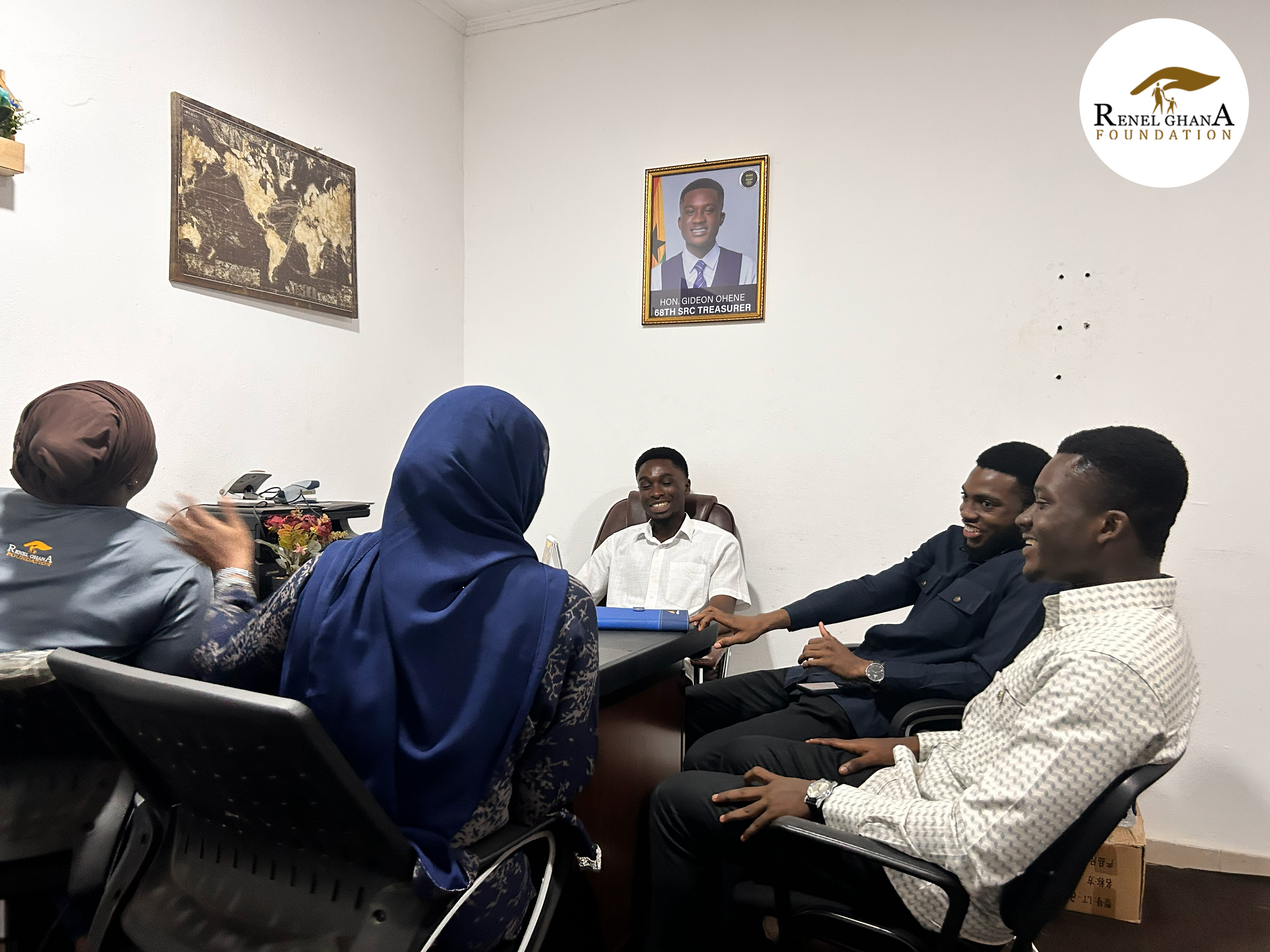
- Support: Renel Ghana Foundation and Songtaba coordinated logistics, follow‑up and linkages to district services.
Outcomes and next steps
- Immediate outcomes: 15 girls trained and equipped to act as peer educators; improved knowledge of rights and referral pathways; action plans drafted for community outreach.
- Planned follow‑up: trainers to lead school and community sensitisation sessions; Renel Ghana Foundation to finalise monitoring templates and collect monthly outreach reports; schedule refresher coaching within six weeks.
- Monitoring indicators: number of peer‑led sessions; youth‑to‑youth referrals; survivors reached and referred; trainee retention and confidence measures.